EG4 LifePower4 vs WallMount 100Ah
Two 5.12 kWh, 51.2 V, 100 Ah batteries in different shapes. The LifePower4 is a rack-style module; the WallMount 100Ah hangs on a wall. Electrically…
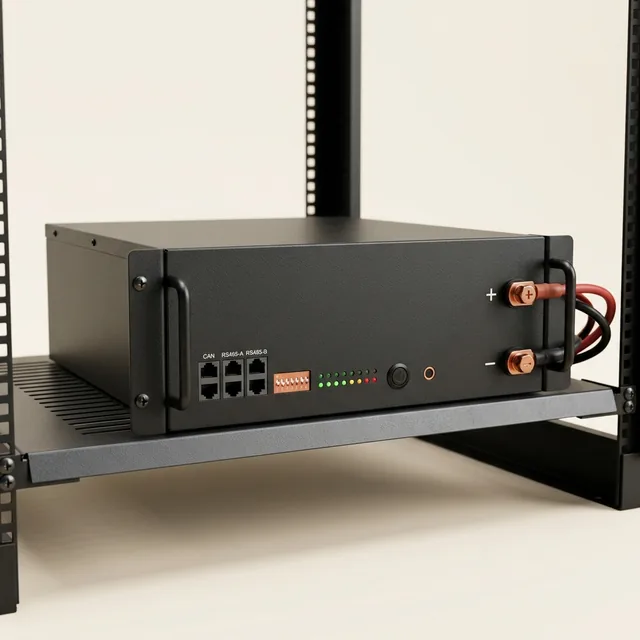 EG4 LifePower4 48V 100AhServer-rack LFP battery5.12 kWh energy51.2 V battery100 Ah capacity0 datasheet edges
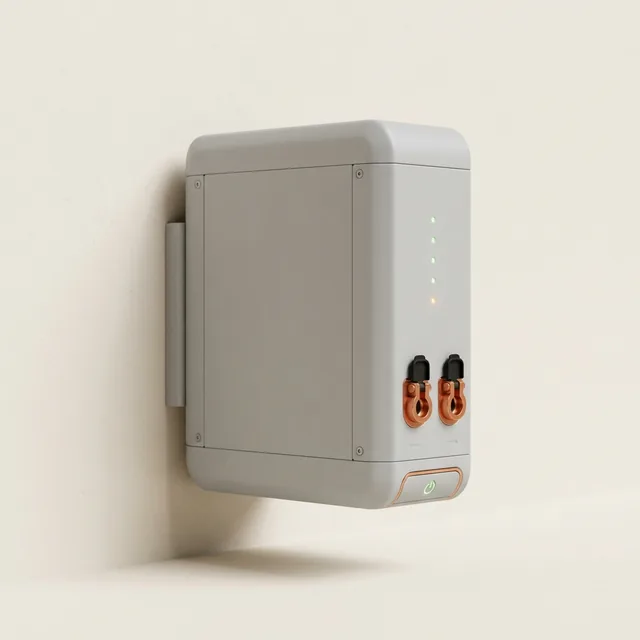 EG4 WallMount 100Ah IndoorWall-mount LFP battery5.12 kWh energy51.2 V battery100 Ah capacity0 datasheet edges
Datasheet scoreboard: 4 lines where both datasheets list a number. It counts who has the bigger (or, for idle draw, smaller) figure; it is not a quality rating and says nothing about reliability.
The short version
The same 5.12 kWh: choose a rack module or a wall mount.
- LifePower4: You already have a server rack or a battery shelf.
- WallMount 100Ah: You want a wall-mounted battery with a conduit-box option and a clean look.
Two 5.12 kWh, 51.2 V, 100 Ah batteries in different shapes. The LifePower4 is a rack-style module; the WallMount 100Ah hangs on a wall. Electrically they are close, so the decision is about space, existing equipment and what you plan to add.
EG4 LifePower4 vs WallMount 100Ah: specs head to head
| Spec | EG4 LifePower4 48V 100Ah | EG4 WallMount 100Ah Indoor |
|---|---|---|
| Nameplate energy capacity | 5.12 kWh | 5.12 kWh |
| Voltage | 51.2 V | 51.2 V |
| Capacity | 100 Ah | 100 Ah |
| Charging current | 100 A (max. continuous) | 100 A (max. continuous) |
| Discharging current | 100 A (max. continuous) | 100 A (max. continuous) |
| Max continuous discharge rate | 5.12 kW | not on datasheet |
| Warranty (as listed) | 10-year standard warranty | 10-year warranty |
| Max modules in parallel | 64 (one listed model: 32) | not on datasheet |
| Ingress protection | IP20 | IP20 |
| Weight | 99.6 lbs (45.2 kg) | 108 lbs (49 kg) |
| Dimensions (H×W×D) | 6.1×19×17.4 in (155×442×470 mm) | 23.2×17.8×7.6 in (590×453×193 mm) |
| Cycle life | not on datasheet | >6000 cycles at 0.5C, 80% DOD |
Highlighted = the better figure where both datasheets give a number (higher is better, except idle draw). More is not always better: a larger solar input, for example, needs a bigger battery and wiring to use it. Sources: EG4 LifePower4 48V 100Ah datasheet · EG4 WallMount 100Ah Indoor datasheet. Checked September 30, 2026. “Not on datasheet” means the sheet does not list that line, not that the product lacks it.
What the LifePower4 and WallMount 100Ah numbers mean
- Energy and current: both list 5.12 kWh, 100 Ah and 100 A maximum continuous charge and discharge.
- Form: the LifePower4 is 19 inches wide and 99.6 lbs; the WallMount 100Ah is 108 lbs and made for a wall.
- Cycle life: the WallMount 100Ah sheet lists more than 6,000 cycles at 0.5C and 80% DoD; the LifePower4 page says tested for more than 6,000 deep discharge cycles at 80% DoD.
- Paralleling: up to 64 LifePower4 modules (one listed model: 32); the WallMount 100Ah has no parallel line in our data.
- Warranty: both list 10 years.
- Enclosure: both IP20, so both belong indoors.
LifePower4 or WallMount 100Ah: who should pick which
Pick the LifePower4 if…
- You already have a server rack or a battery shelf.
- You expect to build a large bank, up to 64 modules.
- You want the lighter module at 99.6 lbs.
Pick the WallMount 100Ah if…
- You want a wall-mounted battery with a conduit-box option and a clean look.
- A small critical-loads backup is the goal; the maker suggests pairing it with the 6000XP.
- You do not have a rack or space for one.
EG4 LifePower4 vs WallMount 100Ah: questions people ask
Which one is cheaper?
We do not publish prices. Ask sellers for current prices on both and compare per kilowatt-hour.
Do they work with the same inverters?
Both are 51.2 V, 100 Ah batteries made for EG4's closed-loop communication. Confirm compatibility with your inverter's battery list before ordering.
Specs change with new revisions; check the current datasheets before you buy. Checked 2026-09-30. Next: size a system or compare any two models.