Guide
Generator with a hybrid inverter: ports, sizing and charging
How a generator plugs into an EG4 inverter, what the datasheets say about size and current, and how to work out fuel and runtime.
On this page
What the generator actually does in this system
In the setups on this page, the generator feeds the inverter’s AC input (or a GridBOSS generator port, or a separate charger) rather than being wired straight to the house. It connects to the inverter’s AC input, the same place a utility connection would go. From there the inverter does two jobs at once: it passes power through to your loads, and it charges the battery. Everything the generator supplies has to cover both. That single idea explains most generator problems, including the main one: the generator is too small.
The off-grid case is the common one. If the battery is empty and the sun has not shown up for days, the generator is the only way back. For how that fits with grid-tied systems, see off-grid, hybrid or grid-tied.
What each inverter’s datasheet says about generators
This is where the four inverters differ most. We list only what is printed. A blank cell means the sheet we have does not print that figure.
| Inverter | Generator or AC input lines as printed | Recommended or minimum generator size |
|---|---|---|
| 6000XP | AC bypass (grid | generator) 50 A; max continuous AC current 37.5 A at 240 VAC; max AC input power 9000 W. Page: a dedicated GEN port, “use up to 7kW.” | Not printed on the spec sheet |
| 12000XP | Generator max continuous current 62.5 A at 240 VAC; AC bypass (grid | generator) 100 A | 90 A; max AC input power 24000 W. Page: “Max generator input: 63A.” | Recommended generator capacity 6000 W to 15000 W |
| 18kPV | Max AC current 50 A at 240 VAC; max AC input power 12000 W; max AC bypass 200 A; AC bypass (generator) 90 A. | Not printed on the spec sheet |
| 12kPV | Max generator | grid passthrough current 80 A | 80 A; max AC input power 8000 W. Page: “Integrated generator input.” | Minimum generator size above 5000 W |
How to read those lines
Two checks show the numbers are consistent with each other. The 6000XP’s 37.5 A at 240 V is 9,000 W (37.5 × 240), which matches its maximum AC input power. The 12000XP’s 62.5 A at 240 V is 15,000 W (62.5 × 240), the top of its recommended generator range. The 18kPV’s 50 A at 240 V is 12,000 W (50 × 240), which matches its maximum AC input power as well. Those are our multiplications of the printed numbers.
Three cautions follow.
- Bypass is not generator size. A bypass rating is the current the inverter can pass straight through to the loads. For the 12000XP, the sheet lists the generator limit (62.5 A) and a recommended generator capacity under separate lines from the bypass (90 A for a generator). Size the generator to the generator lines.
- The 12kPV lists two different limits. It prints 80 A passthrough, which at 240 V is 19,200 W (80 × 240), and a maximum AC input power of 8,000 W. Until the maker explains the gap, plan to the lower power figure and a generator comfortably above the 5,000 W minimum.
- The 6000XP and 18kPV sheets give no generator size. The 6000XP page talks about using “up to 7kW.” That is a ceiling from the page, not a recommendation. Ask the maker or your installer for the generator guidance and the settings document for your model before you buy a generator.
Why an undersized generator fails
The generator has to supply everything that crosses the AC input. In round terms, generator output has to cover the loads that run through the inverter, plus the power sent to the battery, plus the inverter’s own losses.
A worked example with a 6000XP. The sheet lists a maximum charge current of 115 A at 48 VDC from AC. At a nominal 48 V that is 5,520 W into the battery (115 × 48). If 3,000 W of house loads are running at the same time, the AC side needs about 8,520 W (5,520 + 3,000) before losses. A generator rated at 5,000 W cannot carry that; the same arithmetic against the inverter’s 9,000 W maximum AC input shows the inverter could accept it. The sheets we have do not say how the inverter limits charging when the source runs out of capacity, or how to set a lower AC charge current. Find that setting in your inverter’s manual before the first outage, because the generator will be at its limit the whole time the battery is empty.
Motors make it worse. A well pump, compressor or air conditioner pulls several times its running power for a moment as it starts. Our explainer on why a well pump trips your inverter covers the surge. A generator that is just big enough for the running watts can still stall on a motor start while the charger is also drawing.
What a Chargeverter changes
A Chargeverter is a separate 48 V AC battery charger. Instead of passing generator power through the inverter, it converts it directly to DC for the battery bank. The specs:
| As printed | Chargeverter GC | Chargeverter Plus |
|---|---|---|
| Max output | 5120 W at 240 VAC; 3050 W at 120 VAC | 5120 W at 240 VAC; 2560 W at 120 VAC |
| Charge current (adjustable) | 0 to 100 A at 240 VAC; 0 to 45 A at 120 VAC | 0 to 100 A at 240 VAC; 0 to 50 A at 120 VAC |
| Charge voltage (adjustable) | 43 to 57 VDC (default 54 VDC) | 40 to 60 VDC (default 40 VDC) |
| Max input current | 26 A at 240 VAC; 28 A at 120 VAC | 26 A at 240 VAC; 28 A at 120 VAC |
| Idle consumption | about 10 W | about 4 W |
| Operating temperature | 14 to 131°F; IP21 | -40 to 131°F; IP54 |
| Warranty | 3 years (only when used indoors) | 3 years (only when used indoors) |
Two points matter for generator sizing. First, both sheets say you can plug the charger directly into a generator without concern for generator power-quality issues, commonly referred to as “dirty power.” That is attractive for a low-cost generator, though it is a manufacturer statement, not something we tested. Second, a charger’s input is bigger than its output. Taking the GC’s 94 percent maximum efficiency at 240 VAC:
Input from the printed maximum current = 26 A × 240 V = 6,240 WOur arithmetic. 94% is a maximum, so real efficiency is usually lower and input higher. Size the generator above 6,240 W if you want to run the charger at full tilt, plus anything else on the same generator.
Also check the charge voltage before first use. The Plus ships with a default of 40 VDC and the GC with 54 VDC. The 314Ah indoor battery’s sheet lists a charging voltage range of 56 to 57 VDC. Set the charger to your battery’s charge profile as the maker’s manuals say, and use communication between charger and battery where the charger offers it: the GC sheet explains that with an RS485 closed-loop connection the charger’s thresholds can use battery state of charge, and without it they use battery voltage.
The warranty line
Both Chargeverter spec sheets print “3 years (only when used indoors).” The Plus is rated IP54 and its page describes covered outdoor installations in extreme temperatures, with an operating range down to -40°F. That is a real contradiction in the maker’s documents. We cannot resolve it. If you plan to keep a Chargeverter outdoors, ask the seller in writing whether the warranty applies. If it stays indoors, follow the manual’s mounting and clearance instructions.
Fuel and runtime, as labelled arithmetic
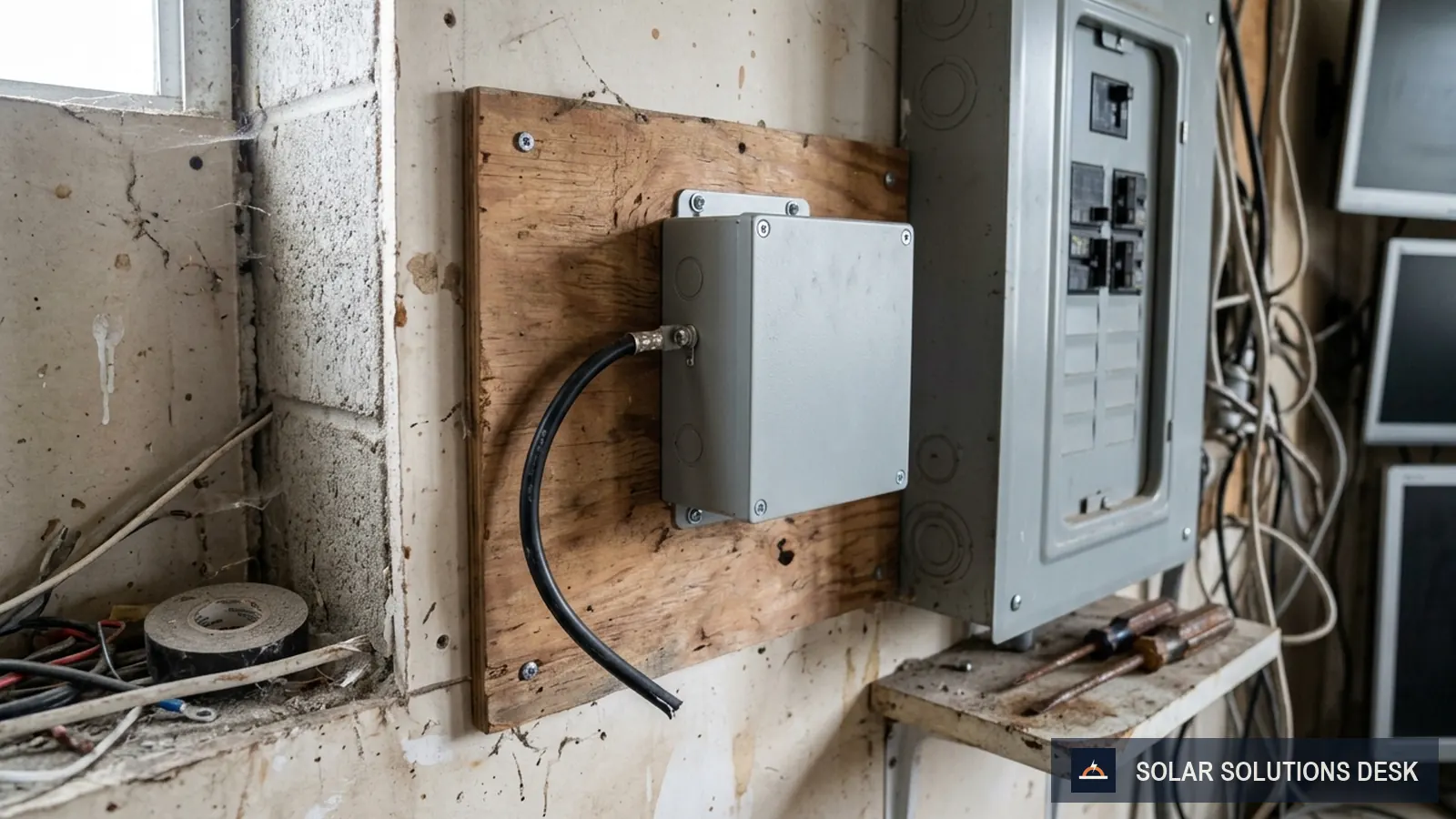
No datasheet tells you how much fuel your generator will burn; the generator’s own manual does, usually as gallons per hour at a stated load. The arithmetic below uses made-up manual figures so you can see the method. Replace them with yours.
Energy in a gallon. The U.S. Energy Information Administration gives 120,214 Btu per gallon of motor gasoline, 91,452 Btu per gallon of propane and 3,412 Btu per kilowatt-hour.
Propane: 91,452 ÷ 3,412 ≈ 26.8 kWh of heat per gallonOur division of EIA’s conversion factors. This is heat content, not electricity delivered.
Electricity per gallon. Suppose the manual says 0.9 gal/h at 5,500 W (an example, not a real model). Electrical output is 5.5 kWh per hour, so a gallon yields 5.5 ÷ 0.9 ≈ 6.1 kWh. Against the 35.2 kWh of heat in that gallon, the generator turns about 17 percent into electricity (6.1 ÷ 35.2). The rest leaves as heat and exhaust. Use that as a sanity check on any number you are given: if a claim implies much more than the manual’s fuel rate, something is off.
Recharging a battery. Take the WallMount 314Ah Indoor, which lists 12.86 kWh of recommended usable energy. Filling it through a GC at maximum efficiency takes about 12.86 ÷ 0.94 ≈ 13.7 kWh of generator output. At the charger’s 5,447 W input that is 13.7 ÷ 5.447 ≈ 2.5 hours, and at 0.9 gal/h, about 2.3 gallons (2.5 × 0.9). A 5-gallon can would last 5 ÷ 0.9 ≈ 5.6 hours at that load. All of this ignores charge taper near full, which makes the last stretch slower, and the loads you run at the same time.
Example: (12.86 ÷ 0.94) ÷ 5.447 × 0.9 ≈ 2.3 galIllustrative. The generator figure 0.9 gal/h is invented for the example; use your manual’s rate at your actual load.
Run the same arithmetic against your daily energy need to decide how many gallons to store. For the daily figure, start from how much battery do you need and the how long will my house last tool. Fuel storage and handling rules are local, so check yours.
Auto-start: what “2-wire” means for you
The 12000XP page says it is “equipped with a generator port” and features “2-wire start/stop auto-start.” In general, a 2-wire start is a pair of conductors that close a contact to tell a generator to start and open it to stop. Your generator needs a matching remote-start input; check its manual before you buy either side. The wording on the page does not say which generators it works with.
The same function shows up elsewhere in the system. The Chargeverter GC lists a dry-contact interface with NO, NC and C terminals and says to connect the automatic generator start circuit to it so the generator charges at preset start and stop voltages or state-of-charge thresholds. The Plus page lists “Generator Two-Wire Start + Programmable Warm Up/Cool Down.” The WallMount 314Ah Indoor sheet lists configurable ports with NO/NC and 12 V outputs “for generator start, alarms, or custom triggers.” So there are several places to put the start signal. Decide which one device controls the generator, because two controllers sending start and stop commands to one generator can conflict.
Safety and placement
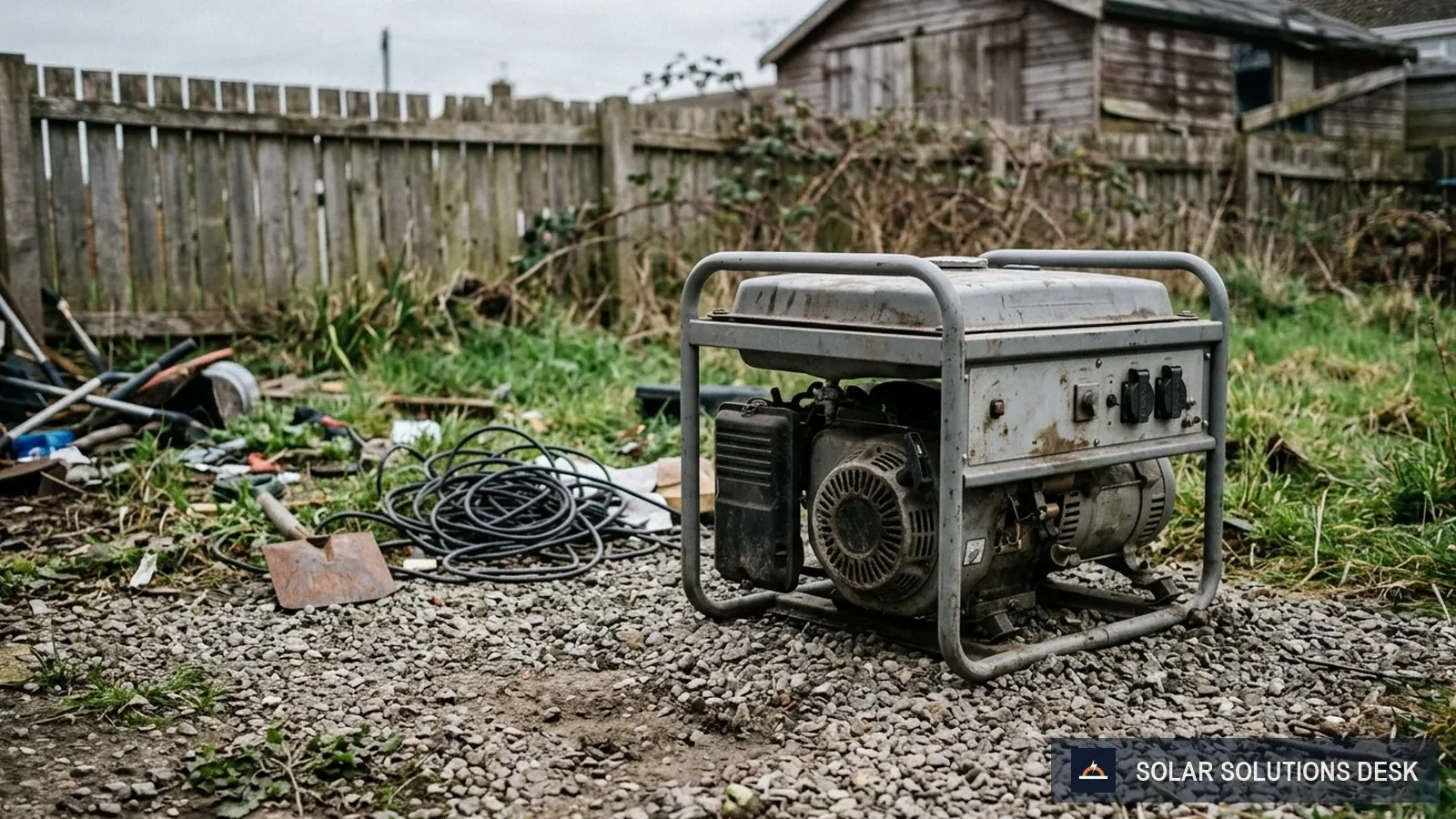
Generator exhaust contains carbon monoxide. The U.S. Consumer Product Safety Commission says to run portable generators outside only, at least 20 feet from the house, and to direct the exhaust away from the home and other buildings. It also says never to use one inside a home, garage, basement, crawlspace, shed or on a porch, “even if doors and windows are open,” and recommends battery-operated CO alarms outside sleeping areas and on each floor. It suggests asking retailers for a generator that shuts off automatically when it detects high carbon monoxide.
The permanent wiring from a generator to an inverter, and any change to your service panel, is electrical work that needs a licensed electrician and compliance with local code.
Common mistakes
- Sizing from loads only. The generator also carries the charging power, as in the 8,520 W example.
- Using a bypass rating as the generator size. They are separate lines on the 12000XP sheet.
- Trusting one number. The 6000XP page says “up to 7kW” and the sheet says 9,000 W maximum AC input. Ask which governs your setup.
- Leaving charger defaults. A 40 VDC default charge voltage is not a 56 to 57 VDC battery charge range.
- Putting the generator in the garage “just for the storm.” That is the case the CPSC warns about.
Checklist before you buy
- Find the generator lines on your inverter’s sheet; if there is no size, ask the maker or installer.
- Add loads and the battery charge power; compare with the generator’s continuous (not starting) watts.
- Decide who controls start and stop, and check the generator has a remote-start input.
- Decide whether the Chargeverter lives indoors; check the warranty line.
- Write your generator’s gallons per hour at your real load, and compute gallons per outage.
- Pick a spot at least 20 feet from the house and plan the CO alarms.

Model pages: 6000XP, 12000XP, 18kPV, 12kPV, Chargeverter Plus, Chargeverter GC. For how a grid outage affects your solar, read what happens to solar when the grid goes down.
Questions people ask
How big a generator does an EG4 12000XP need?
The 12000XP spec sheet lists a recommended generator capacity of 6000 W to 15000 W and a generator maximum continuous current of 62.5 A at 240 VAC. The maker’s page rounds that input limit to 63 A.
Does the EG4 6000XP have a generator port?
Yes. The maker’s page describes a dedicated GEN port and says you can use a generator up to 7 kW. The spec sheet lists a 50 A AC bypass for grid or generator and a maximum AC input power of 9000 W.
What does a Chargeverter do with a generator?
It is a 48 V AC-to-DC battery charger. The maker says you can plug it directly into a generator without concern for power-quality issues and connect the generator’s auto-start circuit to its dry contacts so the generator runs at preset voltage or state-of-charge thresholds.
Can I run a portable generator in the garage if the door is open?
No. The U.S. Consumer Product Safety Commission says never to use one in a home, garage, basement, crawlspace, shed or porch, even with doors and windows open, and to run it outside at least 20 feet from the house.
Is the Chargeverter warranty valid outdoors?
Both Chargeverter spec sheets list a 3-year warranty only when used indoors. The Plus is rated IP54 and its page describes covered outdoor installations, so read the warranty line before you place it outside.
Read next
Watts vs watt-hours: power and energy, explained
A watt measures power at a moment; a watt-hour measures energy over time. A 1,000 W heater running for one hour uses 1 kWh.
What is a LiFePO4 battery? LFP vs lead-acid explained
LiFePO4 (LFP) is a lithium-ion chemistry with an iron phosphate cathode. It trades energy density for long cycle life and thermal…
How to choose a solar inverter: five questions before you compare models
Decide grid or no grid, biggest start-up load, future solar, battery compatibility and location. Then compare models within one family.