Guide
Indoor or outdoor battery install: where a home battery can go
Choosing between an indoor and an all-weather battery comes down to enclosure rating, temperature limits, weight and what your local inspector allows.
On this page
- Start with the room, not the battery
- What the two ratings on the label mean
- Temperature: the surprise is that the indoor battery is not “less cold-rated”
- Weight: the number people forget
- Clearances
- Code and listings: what you can know and what only your inspector can say
- A worked case: two 314Ah batteries in a cold garage
- Choosing: a short decision list
- Common mistakes
- The one-sentence version
Start with the room, not the battery
People usually ask “indoor or all-weather?” as if it were a product question. It is a site question first. Walk the candidate spot and write down four things: the coldest and hottest air it sees, whether water can ever reach it, what the wall or floor is made of, and who has to approve it. Only then compare models.
This page uses EG4 datasheet figures throughout. It covers the batteries in our battery comparison. Whether a given location is legal is a decision for your local authority, and we say where the sources stop.
What the two ratings on the label mean
The 314Ah Indoor sheet prints an enclosure rating of IP20 and lists “floor mount/wall attached” as the mounting options. The 314Ah All-Weather sheet prints IP67 with the same mounting options. The 280Ah Indoor is IP20 and the PowerPro 280Ah All-Weather is IP65. IP ratings are the code system defined in IEC 60529, the standard for degrees of protection provided by enclosures. Compare them as printed. We are not translating the digits into promises the datasheet does not make.
What the maker says in plain words: the IP67 model has an “IP67-rated, weather-resistant enclosure designed for reliable outdoor installations,” and the IP20 model is for “clean, protected spaces.” Read that second phrase as a limit, not a style note. An IP20 battery is for a dry, protected spot.
Temperature: the surprise is that the indoor battery is not “less cold-rated”
Many buyers assume the all-weather model tolerates more cold. For the 314Ah pair, the printed ranges are identical.
| As printed on the datasheet | 314Ah Indoor | 314Ah All-Weather |
|---|---|---|
| Enclosure rating | IP20 | IP67 |
| Charging range | 32 to 122°F (0 to 50°C) | 32 to 122°F (0 to 50°C) |
| Discharging range | -4 to 131°F (-20 to 55°C) | -4 to 131°F (-20 to 55°C) |
| Heater power consumption | 448 W | 448 W |
| Heater on / off (internal temperature) | ≤32°F (0°C) / ≥37°F (3°C) | ≤32°F (0°C) / ≥37°F (3°C) |
| Weight | 293.2 lbs (133 kg) | 309 lbs (140 kg) |
| Dimensions (H × W × D) | 34.1 × 18.1 × 9.6 in | 34.6 × 21.7 × 9.3 in |
All of these rows come from the two spec sheets. The 280Ah pair lists a smaller heater, 224 W, switching on at 32°F and off at 41°F internal temperature, and a charging range of 32 to 122°F.
Two practical readings follow. First, charging is only allowed from 32°F up, so the battery must warm itself, or be kept warm, before it can take a charge on a freezing morning. The sheets list the heater but do not spell out in this table how heater and charging interact, so ask the maker or installer for the sequence. Second, the heater is not free.
What a 448 W heater can cost you
A heater consumes energy that would otherwise go to your loads. The sheet gives power consumption, not how often it runs, so the figures below are an upper bound, not a forecast.
314Ah: 448 × 8 ÷ 1,000 = 3.58 kWh per battery, per 8-hour cold night
280Ah: 224 × 8 ÷ 1,000 = 1.79 kWh per battery, per 8-hour cold nightOur calculation. It assumes the heater runs the whole time, which the datasheets do not claim. Real use depends on the temperature and the battery’s own heat.
Against the 314Ah’s listed usable energy of 12.86 kWh, 3.58 kWh would be about 28 percent (3.58 ÷ 12.86). That is the ceiling, and it tells you why a battery that sits in a place that stays above freezing wastes nothing on heat. If you plan a garage in a cold climate, size the battery with this in mind: see how much battery do you need.
Weight: the number people forget
A WallMount battery is not a light fixture. The 314Ah Indoor weighs 293.2 lbs, the 314Ah All-Weather 309 lbs, the 280Ah Indoor 286.6 lbs and the PowerPro 280Ah All-Weather 308.6 lbs. The all-weather 314Ah is 15.8 lbs heavier than the indoor one (309 − 293.2) and wider by 3.6 in (21.7 − 18.1).
Indoor: 293.2 lbs ÷ (18.1 × 9.6 in ÷ 144) = 293.2 ÷ 1.21 ft² ≈ 243 lbs per ft²
All-Weather: 309 lbs ÷ (21.7 × 9.3 in ÷ 144) = 309 ÷ 1.40 ft² ≈ 220 lbs per ft²Our arithmetic from the printed dimensions and weights. It describes the footprint on the floor, not the load a wall or bracket sees.
Two batteries stacked or side by side double the weight: 586.4 lbs for two indoor 314Ah units, 618 lbs for two all-weather ones. The datasheet gives the weight and the mounting options (“floor mount/wall attached”); it does not tell you what your wall or slab can carry. That is a question for the installer and, where the structure is in doubt, a structural professional. Do not assume that a stud wall which holds a water heater will hold this.
A single rack-style LifePower4 module weighs 99.6 lbs, but a rack holds several modules and the weights add up. Our battery choice guide compares them.
Clearances
Spacing is a design input, and the maker prints it for one of the batteries. On the PowerPro 280Ah All-Weather sheet: “Outdoor installations require only 3 inches of clearance side-to-side and 0.75 inch spacing front-to-back between stacked units, while indoor installations require 6 inches of clearance and 2 inches of spacing.” That is that sheet’s own wording for that model, and the figures are not a general rule for other batteries. The EG4 product pages for the 280Ah batteries list a document titled “EG4 Battery Spacing Requirements for Installation”; read the one for your model before you draw a layout. Codes add their own distances on top, which brings us to the next section.
Code and listings: what you can know and what only your inspector can say
Four terms come up, and they get mixed up.
- UL 9540A is a test method. UL Solutions describes it as the standard for assessing fire propagation related to thermal runaway events in battery energy storage systems, with cell, module and installation-level testing. The Sustainable Energy Action Committee states it plainly: it is not a certification standard, so no “listing” results from the test. When a datasheet says “UL 9540A: Yes,” it tells you the test was done.
- UL 9540 is the system-level safety standard. The 314Ah sheets do not claim a blanket listing. They say to see the maker’s website for supported UL 9540 configurations. The maker’s product page lists the indoor 314Ah as UL 9540 “with FlexBoss21 & FlexBOSS18.” In other words, the listing is tied to a pairing. If your permit office asks for a UL 9540 listing, check that your exact battery-and-inverter combination is on the list.
- NFPA 855 and the International Residential Code (IRC) and International Fire Code (IFC) are the installation rules. A Sandia National Laboratories report says IRC section R328 covers the installation, spacing, locations, energy-rating limits and ventilation for energy storage systems in one- and two-family dwellings, and that IFC section 1207 deals with systems exceeding the limits in R328.5, in the 2021 editions. It also notes that the 2024 IFC aligned its energy storage requirements with NFPA 855.
- The authority having jurisdiction (AHJ) is the local official, typically the building or fire department, who applies those documents. A Building America Solution Center brief quotes the IRC: the building official has authority to render interpretations of the code (2015 edition).
UL Solutions adds that UL 9540A testing is a methodology for systems whose design or installation conditions exceed the limits set by NFPA 855, NFPA 1, the IFC or the IRC, and that the 2026 edition of NFPA 855 and the 2024 IFC require fire testing to UL 9540A in certain situations.
What we could not give you. We could not open the text of NFPA 855 or IRC R328, so this page does not quote their numbers for maximum kWh per location, setback distances or wall protection. Those limits exist and they vary by room type. A 314Ah battery is 16 kWh nominal on the sheet, so two of them are 32 kWh. Ask your installer or AHJ which limit applies to a garage, a utility room or an exterior wall at your address, and which edition your jurisdiction has adopted. Editions in the sources above range from the 2021 IRC to the 2024 IFC to NFPA 855 editions published in 2023 and 2026, and a city may amend any of them.
Electrical work on a battery system needs a licensed electrician and compliance with local code, and many places require a permit and inspection.
A worked case: two 314Ah batteries in a cold garage
Take a hypothetical home with two indoor 314Ah batteries on a garage wall, which is an unheated space in a climate that freezes. Nothing here is a measurement; it is the datasheet figures multiplied out.
| Item | Arithmetic | Result |
|---|---|---|
| Nominal energy | 2 × 16 kWh | 32 kWh |
| Recommended usable energy | 2 × 12.86 kWh | 25.72 kWh |
| Heater, worst case, 8 cold hours | 2 × 448 W × 8 ÷ 1,000 | 7.17 kWh |
| Heater share of usable energy | 7.17 ÷ 25.72 | about 28% |
| Wall load | 2 × 293.2 lbs | 586.4 lbs |
The usable and nominal figures come from the indoor sheet. The heater row is a ceiling: the sheet does not say how long the heater runs. Even so, the table shows why a garage in a freezing climate is a design decision, not a default. If the same wall were in a heated utility room, the heater row would be near zero and you would size on the usable figure alone.
Choosing: a short decision list
- Is the spot dry, protected and conditioned or at least above freezing most of the time? An IP20 indoor model fits, subject to the AHJ.
- Is it exposed to rain, hose spray or splash? Look only at the all-weather models, IP67 (314Ah) or IP65 (PowerPro 280Ah), and confirm with your AHJ that outdoor placement is allowed where you want it.
- Is it an unheated garage? Both families list heaters; the indoor 314Ah has the same temperature ratings as the all-weather one. The garage still has to be dry, and the inspector has to accept it.
- Is the wall or floor in doubt? Get the installer to confirm structure before ordering. Budget for 293 to 309 lbs per 314Ah unit.
- Do you need UL 9540 on paper? Match the battery to the inverter configuration listed by the maker.
Common mistakes
- Treating IP20 as “weatherproof if it is under a roof.” The sheet for the indoor model calls it a battery for clean, protected spaces. Under a carport roof is not that.
- Ignoring the heater in the energy budget. In a cold garage the worst case is 3.58 kWh per 314Ah battery per 8-hour night, from the datasheet’s own heater figure.
- Buying all-weather to “be safe” when the battery will live in a basement. It is 15.8 lbs heavier and 3.6 in wider, and the 314Ah sheets do not list a wider temperature range.
- Putting the charger outdoors because it has an outdoor rating. The Chargeverter Plus spec sheet advertises IP54 and “allowing for installation outside,” while the same sheet limits its 3-year warranty to use indoors. Read the warranty line, not only the rating.
- Skipping the permit conversation. The inspector decides, and editions differ.
The one-sentence version
Choose the location the inspector will accept and the structure can carry, then buy the enclosure that suits it: IP20 where it is dry and protected, IP65 or IP67 where it is not. For the full model list, see the WallMount 314Ah Indoor and WallMount 314Ah All-Weather pages, and the guide to buying solar equipment online before you order.
Questions people ask
Can an indoor-rated battery go in an unheated garage?
Check the temperature table on its datasheet first. The WallMount 314Ah Indoor lists charging from 32°F to 122°F and a built-in heater that switches on at 32°F internal temperature. A garage is still not a rain-proof place: the enclosure is rated IP20, so keep it dry. Ask your local inspector whether a garage is allowed.
What is the practical difference between IP20 and IP67 on these batteries?
IP20 and IP67 are enclosure ratings printed on the datasheets; the IP Code itself is defined in IEC 60529. The maker describes the IP67 model as a weather-resistant enclosure for outdoor installs and sells the IP20 model for indoor walls or floors.
Do the all-weather batteries tolerate more cold than the indoor ones?
Not on the 314Ah pair. Both sheets list the same charging range (32 to 122°F), the same discharging range (-4 to 131°F) and the same heater (448 W, on at 32°F, off at 37°F internal temperature).
How heavy is a WallMount battery?
The 314Ah Indoor weighs 293.2 lbs and the 314Ah All-Weather 309 lbs, per the datasheets. The 280Ah Indoor is 286.6 lbs and the PowerPro 280Ah All-Weather is 308.6 lbs. Ask the installer how the wall or floor will carry that.
Who decides whether my battery location is legal?
The authority having jurisdiction, usually the local building or fire official. Codes such as the International Residential Code, the International Fire Code and NFPA 855 are published in several editions, and which one applies depends on where you live.
Read next
Renewable Outdoors review: what the company says and what buyers report
Renewable Outdoors is a Denver-based online seller listing EG4 products, with an A+ BBB rating and a 2.9 Trustpilot score from six…
Watts vs watt-hours: power and energy, explained
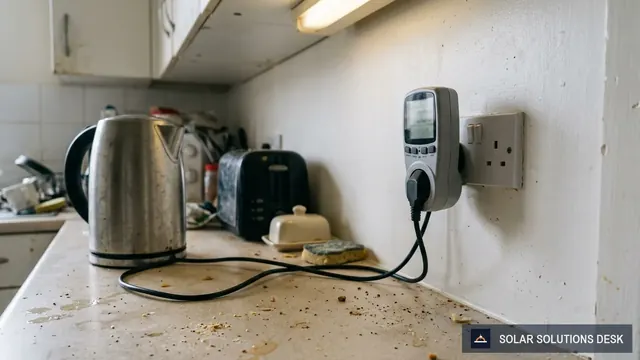
A watt measures power at a moment; a watt-hour measures energy over time. A 1,000 W heater running for one hour uses 1 kWh.

Signature Solar reviews: what the company says and what buyers report
Signature Solar is a Texas seller of DIY solar equipment with an A+ BBB rating and mixed-to-positive public reports. Complaints we read…