Explainer
How long do solar batteries last? Years, cycles and depth of discharge
A battery has two clocks, one counted in years and one in charge cycles. Here is how to read both on a datasheet.
On this page
Two clocks, not one
A battery wears out on two clocks at once. One counts calendar time. The other counts charge cycles. National laboratory researchers model both: degradation from calendar time and from cycle aging, shaped by temperature, operating window, charge and discharge rates and storage conditions. So "how long will it last" has no single answer. A battery that cycles daily may hit its cycle limit first. A backup battery that cycles a few times a year will be limited by age and temperature instead.
The only number the maker commits to in writing is the warranty. Everything else on a datasheet is a test result under stated conditions.
How a cycle rating is quoted
A cycle rating is a sentence with four parts. Drop any part and the number means little.
- Depth of discharge (DoD). How much of the battery you use per cycle. Battery University puts the trend simply: the smaller the discharge, the longer the battery will last. Its tables are for a different lithium chemistry (NMC) than EG4's lithium iron phosphate cells, so use them for direction, not for numbers.
- C-rate. How fast you charge and discharge. At 1C a 1 Ah battery gives 1 A for an hour; at 0.5C it gives 500 mA for two hours. For a 314 Ah battery, 0.5C is 314 × 0.5 = 157 A (our arithmetic), which matches the 157 A that EG4 lists as the recommended charge and discharge current.
- Temperature. EG4's 314Ah figure is measured at 25 °C. Battery University treats anything dwelling above 30 °C as elevated and shows a lithium-ion cell stored full at 40 °C keeping 65% of capacity after a year against 80% at 25 °C.
- End-of-life capacity. The battery does not stop at the last cycle. It reaches some fraction of its original capacity. EG4's 314Ah sheet labels its figure "70% EOL capacity". After 10,000 cycles the battery would still hold about 70% of what it held new.
What EG4 prints
These figures are copied from the maker's spec sheets and product pages. We have not tested any of them.
| Battery | Cycle life as printed | Warranty as printed |
|---|---|---|
| WallMount 314Ah Indoor and All-Weather | 10,000 cycles @ 0.5C, 25 °C, 80% DOD (70% EOL capacity) | 10 years or 10,000 cycles |
| WallMount 100Ah Indoor | >6,000 cycles at 80% DOD | 10 year |
| LifePower4 48V v2 | >6,000 cycles at 80% DoD | 10-year standard warranty |
| LL-S 48V 100Ah | Spec sheet: more than 7,000 cycles. Product page: over 6,000 cycles at 80% DOD | 10 year |
Two things stand out. First, the 314Ah sheets say "10 years or 10000 cycles" in the warranty line. The line itself does not say how the two limits combine, so get the full warranty document before you buy and read that sentence. Second, the LL-S spec sheet and its product page disagree on the cycle count (7,000 versus 6,000). When a maker's own pages differ, plan on the lower figure and ask which is current.
The 314Ah indoor page also lists 115.7 MWh of lifetime energy while its spec sheet lists 122.2 MWh. The sheet shows its sum: 12.861 kWh × 10,000 cycles × 95% efficiency. Swap in 90% and you get 115.7 (our arithmetic), so the two pages seem to assume different efficiencies. Either way it is a rating, not a forecast.
Worked example: from cycles to years
Take a battery rated for 10,000 cycles and run one full 80% cycle a day. This is our arithmetic, not a maker claim.
| Rated cycles | 1 cycle a day | 2 cycles a day |
|---|---|---|
| 6,000 | 6,000 ÷ 365 = 16.4 years | 6,000 ÷ 730 = 8.2 years |
| 8,000 | 8,000 ÷ 365 = 21.9 years | 8,000 ÷ 730 = 11.0 years |
| 10,000 | 10,000 ÷ 365 = 27.4 years | 10,000 ÷ 730 = 13.7 years |
Now compare with the warranty. In 10 years a daily-cycled battery completes 3,650 cycles, which is 36.5% of a 10,000 cycle rating (3,650 ÷ 10,000). For most households the calendar, not the cycle count, is the binding limit. Those long-year rows are not a prediction. Cells also age while they sit, and no spec sheet turns that into a number for your climate.
For a backup-only battery that cycles 20 times a year, 10,000 cycles is irrelevant. What matters is the warranty term, the temperature of the room and whether the battery is kept in its allowed range.
A second way to count: energy throughput
Instead of cycles, you can count the energy a battery moves. The 314Ah spec sheet lists a lifetime production of 122.2 MWh, and it also lists a 10-year design life. Suppose a house takes 8 kWh a day from the battery. That is 8 × 365 = 2,920 kWh a year, or 2.92 MWh. Dividing 122.2 by 2.92 gives about 42 years of throughput (our arithmetic). The 8 kWh is also only 8 ÷ 12.86 ≈ 62% of the usable capacity, so each day is a shallower cycle than the rated 80%. The number is a ceiling set by the rating. It says the cycle count is unlikely to be what ends the battery's life. Age, temperature and the warranty term come first.
The backup-only case is more extreme. If the battery cycles 20 times a year, ten years is 200 cycles, 2% of a 10,000 cycle rating (200 ÷ 10,000). Nothing about the cycle number matters there. What matters is whether the battery is still in warranty and still in a safe temperature range.
What actually shortens battery life
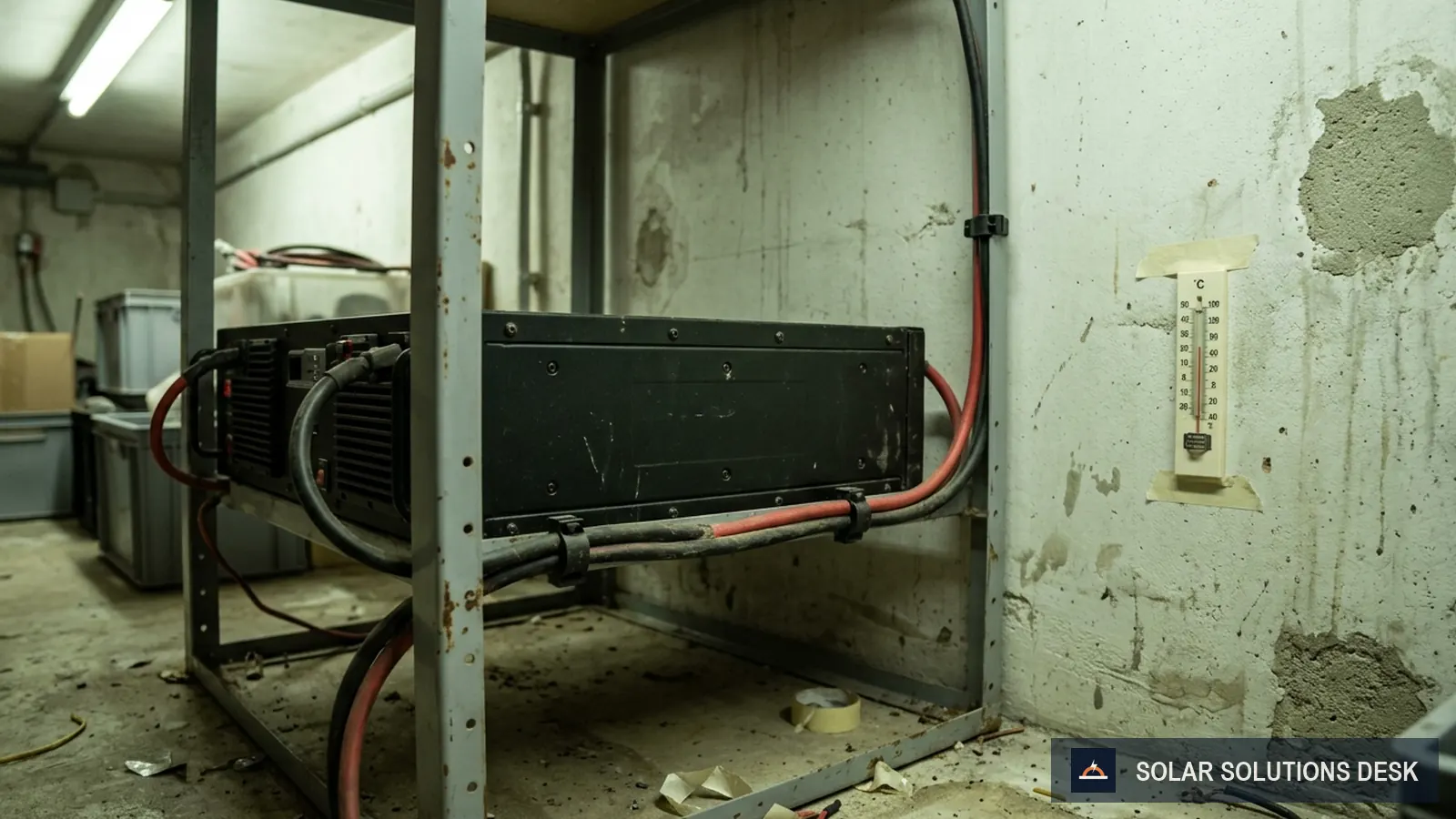
- Heat. A battery in an unvented garage or on a sunny wall can run hotter than the 25 °C in the test.
- Cold charging. EG4's 314Ah sheet gives a charging range of 0 to 50 °C and a discharging range of -20 to 55 °C. Its all-weather model has internal heaters that turn on at 0 °C internal temperature.
- Hard, fast cycling. Charge and discharge rates are among the factors lifespan researchers track. Stay within the recommended currents on the sheet.
- Deep cycling every day. If you only need a few kilowatt-hours a day, a larger battery cycles shallower. See how much battery do you need.
- Running the reserve down. A footnote on EG4's 314Ah sheet recommends a setting of no lower than 20% so the recommended 80% depth of discharge is kept.
Common mistakes
- Dividing cycles by 365 and calling it the lifespan. The table above is a ceiling set by the cycle rating, not a forecast.
- Comparing cycle counts at different depths. 6,000 cycles at 80% and 6,000 cycles at 50% are different claims. So are two ratings with different end-of-life percentages.
- Treating nominal capacity as usable capacity. The 314Ah battery is a 16 kWh nominal battery whose usable figure at the recommended 80% is 12.86 kWh. The cycle rating applies to that 80%.
- Skipping the warranty text. The datasheet line is a headline. The warranty document sets the terms.
How to read a warranty
The FTC's guide to warranty law says a written warranty should state what is covered, how long coverage lasts, what is not covered and what the company will do about a problem. Check each against the battery:
- Is the term in years, cycles, or both, and does the earlier limit end the coverage?
- Is any capacity level guaranteed, such as a minimum state of health at year 10, or only that the battery is free of defects?
- What operating limits does the warranty assume: temperature, charge current, installer requirements, registration?
- If it fails, what does the maker provide: repair, replacement or refund, and who pays for removal and shipping of a 293 lb battery?
- Is the warranty yours if the home is sold?

The FTC guide also explains that "limited" is the label for any warranty that falls short of the five "full" conditions. So a "limited" label alone tells you little. The terms are where batteries differ.
Before you buy
Pick the battery from your loads first, then compare the life figures on equal terms: same depth of discharge, same C-rate, same end-of-life percentage. Put the pack where it stays inside the temperature range on its sheet. Have a licensed electrician install it to local code. Then keep a copy of the warranty and the serial number with your system records.
To see how much battery your own loads call for, try the how long will my house last tool, and compare models in EG4 batteries compared.
Related: the cell chemistry behind these cycle figures is described in what a LiFePO4 battery is.
Questions people ask
How many years does a solar battery last?
There is no single figure. The maker's warranty term is the only number you can hold them to; EG4 prints 10 years on its wall batteries. Real life depends on temperature, depth of discharge, charge rate and how many cycles you use per year.
What is depth of discharge?
It is the share of the battery's capacity you use in one cycle. Using 80% of a battery and leaving 20% in reserve is an 80% depth of discharge. Cycle ratings are quoted at a stated depth, and shallower cycling generally means more cycles.
What does 10,000 cycles mean?
It means the maker expects the battery to complete 10,000 charge-and-discharge cycles under the listed test conditions before its capacity falls to a stated end-of-life level. EG4's 314Ah sheet states 70% of original capacity. It is not a promise of 10,000 cycles in your garage.
Does a backup-only battery last longer?
A battery that rarely cycles uses up its cycle count slowly, so age and temperature matter more. The warranty term still applies, and calendar aging continues while it sits.
Does cold weather shorten battery life?
Temperature affects lithium batteries both ways. Heat speeds aging, and EG4 lists charging limits of 0 to 50 °C on its WallMount sheets. Its all-weather models include heaters that switch on at an internal 0 °C.
Is a warranty the same as battery life?
No. A warranty is the maker's written promise about defects and, sometimes, capacity or cycles. Read what it covers, how long, what is excluded and what the maker will do, as the FTC's warranty guide lists.
Read next
Watts vs watt-hours: power and energy, explained
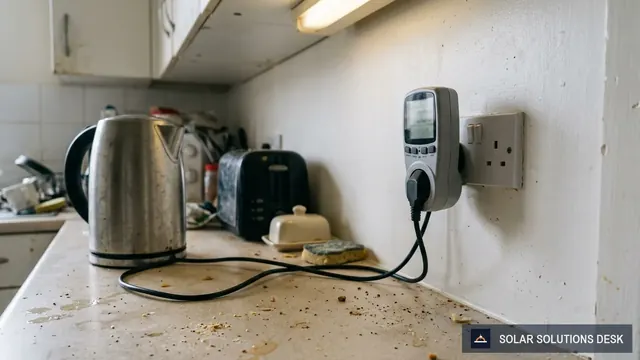
A watt measures power at a moment; a watt-hour measures energy over time. A 1,000 W heater running for one hour uses 1 kWh.
What is a LiFePO4 battery? LFP vs lead-acid explained
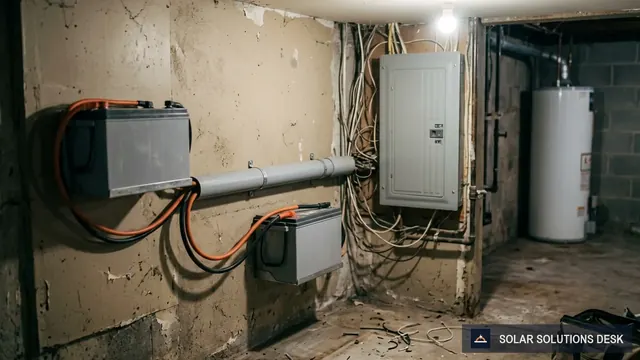
LiFePO4 (LFP) is a lithium-ion chemistry with an iron phosphate cathode. It trades energy density for long cycle life and thermal…
How to choose a solar inverter: five questions before you compare models
Decide grid or no grid, biggest start-up load, future solar, battery compatibility and location. Then compare models within one family.