Explainer
What is MPPT? How a solar charge controller finds the most power
An MPPT lets the panels run at their best voltage while the battery sits at its own. The spec sheet numbers tell you which strings fit.
On this page
What an MPPT does
A solar panel does not have one voltage. Its output follows a curve: at one extreme no current flows, at the other the panel is short-circuited, and power (volts times current) peaks somewhere in between. That peak is the maximum power point. Victron's technical paper shows how harvesting at a voltage that is too low or too high gives less power.
A PWM controller is in essence a switch that connects the array to the battery, so the array voltage is pulled down to near the battery's. An MPPT controller adjusts its input voltage to harvest the maximum power and then transforms that power to suit the battery. That decouples the two voltages: Victron's example is a 12 V battery on one side and panels wired in series to make 36 V on the other. Victron adds that it is generally accepted that MPPT outperforms PWM in cold to temperate climates, while the two perform about the same in subtropical to tropical ones.
The decoupling is why home-scale equipment uses high-voltage strings. Panels in series at several hundred volts feed a 48 V battery through the MPPT, and the same power at higher voltage means less current in the PV wiring. The same arithmetic applies on the battery side; see why battery systems use 48 volts.
The four voltage numbers on a spec sheet
Four separate lines decide whether a string works. They are not interchangeable.
- Maximum PV voltage. The ceiling. Exceed it and you can damage the unit. EG4's 18kPV sheet says damage caused by reaching more than 600 VDC is not covered under warranty.
- Start-up voltage. The voltage at which the unit wakes up. The 6000XP lists 100 VDC ± 10 VDC.
- MPPT operating range. Where the tracker can hold the maximum power point. The 6000XP lists 120 to 385 VDC, the 18kPV 140 to 500 VDC and the MPPT 100-48HV 120 to 450 VDC.
- Per-MPPT current limit. Each tracker has its own. The 6000XP lists 17 A usable on each of its two MPPTs.
Start-up voltage is not the operating range. A string can be above start-up and still sit outside the window where the controller tracks. Aim the string's working voltage at the middle of the MPPT range. EG4's 18kPV sheet makes the same point: when sizing, it is best practice to follow the nominal MPPT voltage and not the minimum or maximum of the operating range. Nominal MPPT voltage is 360 VDC on the 18kPV and 320 VDC on the 6000XP.
Operating range can also depend on the battery. Victron's SmartSolar MPPT RS lists 65 to 450 V, with the note that PV open-circuit voltage should not exceed 8 times the battery float voltage. Always read the footnotes under the table.
The three EG4 products side by side
| Spec line | 6000XP | 18kPV | MPPT 100-48HV |
|---|---|---|---|
| Number of MPPTs | 2 | 3 | 1 |
| Start-up voltage | 100 VDC ± 10 VDC | 100 VDC | not listed on the sheet |
| MPPT operating range | 120 to 385 VDC | 140 to 500 VDC | 120 to 450 VDC |
| Top of input range | 480 VDC | 600 VDC (550 VDC high protection) | 500 VDC open circuit |
| Current per tracker | 17 A usable | 25 A, 15 A, 15 A usable | 22 A max string current |
The MPPT 100-48HV is a stand-alone controller. EG4 describes it as extracting the maximum available power from PV modules and converting it to a lower voltage to charge the battery bank, and its sheet lists a 48 V nominal battery, 5 to 100 A charge current (default 80 A) and 94% maximum efficiency. The inverters have trackers built in. In both cases the voltage test is the same.
Why temperature moves your string voltage
Course notes from Penn State state it directly: below 25 °C both the maximum-power voltage and the open-circuit voltage rise, and above 25 °C both fall. The inverter's absolute maximum voltage must be at least the string's maximum open-circuit voltage at the lowest recorded temperature, and the string must still operate within the MPPT range at the lowest and the average highest temperatures. That gives two checks, cold and hot, for every string.
Worked example: one hypothetical panel, three EG4 products
The panel below is invented for the arithmetic, not a real product. Replace it with your panel's datasheet values. All arithmetic is ours.
| Panels in series | Vmp at 25 °C | Voc at -10 °C | 6000XP (120 to 385 V window, 480 V top of input range) | 18kPV (140 to 500 V window, 550 V protection) | MPPT 100-48HV (120 to 450 V window, 500 V max) |
|---|---|---|---|---|---|
| 8 | 328 V | 429 V | Fits | Fits | Fits |
| 9 | 369 V | 483 V | Fails: 483 V is over the 480 V top of the input range | Fits | Fits, 17 V under the 500 V limit |
| 10 | 410 V | 536 V | Fails: window and maximum | Fits at -10 °C, but only 14 V under 550 V | Fails: 536 V is over 500 V |
At -20 °C the same ten-panel string reaches 10 × 54.95 = 549.5 V, which is right at the 18kPV's 550 V protection level. That is the kind of margin to avoid, and the reason EG4 tells you to plan around the protection value instead of the 600 V maximum. Eight panels per string is comfortable on all three. The string calculator does this check with your panel's own numbers and your coldest temperature.
Check the hot side as well. Assume a Vmp coefficient of -0.35%/°C and a cell temperature of 65 °C. Each panel then gives 41.0 × (1 − 0.0035 × 40) = 35.3 V, and eight give 282 V, still inside every window above. A short string is where the hot-day check bites.
Current limits and power per tracker
Power equals voltage times current, so the current in each string follows from the panel's current rating. Parallel strings add their currents. With the hypothetical 13.4 A panel:
- 6000XP: one input per MPPT, 13.4 A against 17 A usable. Fits.
- 18kPV MPPT 1 has two inputs and 25 A usable. Two strings in parallel give 2 × 13.4 = 26.8 A. Fails. MPPT 2 and 3 each take one string against 15 A. Fits.
- MPPT 100-48HV: the spec sheet gives 22 A as the maximum PV string current, so two of these parallel strings (26.8 A) exceed it. Its sheet mentions 5,500 W when combining two strings, so a lower-current panel is needed for that case.
Power matters too. Eight 550 W panels make 4,400 W per string. The 6000XP sheet lists maximum utilized solar power of 8,000 W (4,000 W per MPPT) and a higher recommended maximum solar input of 10,000 W. A 4,400 W string is already above the per-MPPT utilized figure, so the extra is headroom, not extra output. The MPPT 100-48HV lists 5,500 W as its maximum usable PV array power.
Common mistakes
- Sizing to the room-temperature Voc. The string is at its highest voltage on a cold, clear morning.
- Using the maximum PV voltage as the target. Aim near the nominal MPPT voltage, not the ceiling.
- Confusing start-up with the operating range. They are separate lines.
- Paralleling strings without adding the currents. The limit is per tracker, not for the whole unit.
- Ignoring the footnotes. The 18kPV sheet carries three asterisked notes on voltage; the 6000XP sheet notes its idle consumption figure was tested at a constant 300 VDC PV source.
Before you order
- Pull Voc, Vmp, Imp, Isc and the Voc coefficient from your panel's datasheet.
- Pick your site's lowest expected temperature and compute cold Voc per string.
- Compare against the inverter's maximum and, for design margin, its protection voltage.
- Check the working voltage sits inside the MPPT window at hot and cold.
- Add the currents of any parallel strings and compare per tracker.
PV wiring is high-voltage DC. Have a licensed electrician design and install it to local code. For model details see the 6000XP, 18kPV and MPPT 100-48HV pages, or the glossary for terms.
Questions people ask
What does MPPT stand for?
Maximum power point tracking. The controller continuously adjusts the voltage it draws from the solar panels to the point where voltage times current is highest, then converts that power for the battery.
Is MPPT better than PWM?
Usually, in cold to temperate climates. A PWM controller connects the array to the battery and pulls the array voltage down to near the battery's, so the panels are mostly not used at their maximum power point. Victron says it is generally accepted that MPPT outperforms PWM there, with similar results in subtropical to tropical climates.
What is the difference between start-up voltage and MPPT operating range?
Start-up voltage is where the unit wakes up. The MPPT operating range is where it tracks the maximum power point. EG4 prints them separately: the 6000XP lists 100 VDC start-up and a 120 to 385 VDC MPPT range.
What happens if my string voltage goes over the maximum?
On EG4's 18kPV sheet, damage caused by reaching more than 600 VDC is not covered under warranty. Panel voltage rises in the cold, so check the string at the coldest temperature for your site.
Can I put two strings on one MPPT input?
Only if the combined current stays under that tracker's limit. Parallel strings add their currents. The 18kPV lists 25 A usable on MPPT 1, which has two inputs, and 15 A on each of MPPT 2 and 3.
Do I have to size to the maximum voltage?
No. EG4's 18kPV sheet says that when sizing, it is best practice to follow the nominal MPPT voltage rather than the minimum or maximum of the operating range.
Read next
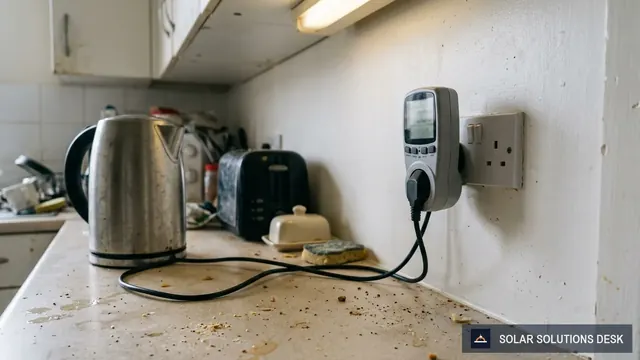
Watts vs watt-hours: power and energy, explained
A watt measures power at a moment; a watt-hour measures energy over time. A 1,000 W heater running for one hour uses 1 kWh.
What is a LiFePO4 battery? LFP vs lead-acid explained
LiFePO4 (LFP) is a lithium-ion chemistry with an iron phosphate cathode. It trades energy density for long cycle life and thermal…

How to choose a solar inverter: five questions before you compare models
Decide grid or no grid, biggest start-up load, future solar, battery compatibility and location. Then compare models within one family.