Guide
Solar batteries in cold weather: charging limits, heaters and voltage
Lithium batteries can discharge in the cold but cannot charge below freezing, panels run at higher voltage, snow blocks output and winter sun is thin. What the datasheets say.
On this page
Cold changes four things in a solar-plus-battery system, and they pull in different directions. The battery can deliver power in conditions where it cannot take any. The panels produce more voltage but less energy. Snow can switch the array off for days. And the sun that is left is lower and shorter. This guide goes through them in that order, with the figures that EG4 prints on its own sheets, and ends with a placement checklist.
Part 1: the battery can discharge in cold it cannot charge in
Look at the temperature lines on the lithium battery sheets. They list different ranges for charging and discharging:
| Battery | Charging | Discharging | Heater | Heater on / off |
|---|---|---|---|---|
| WallMount 314Ah all-weather | 32 to 122°F (0 to 50°C) | −4 to 131°F (−20 to 55°C) | 448 W | at or below 32°F (0°C) / at or above 37°F (3°C) |
| PowerPro 280Ah all-weather | 32 to about 122°F (0 to about 50°C) | −4 to about 131°F (−20 to about 55°C) | 224 W | at or below 32°F (0°C) / at or above 41°F (5°C) |
| LifePower4, sheet v1.1.2 | 32 to 113°F (0 to 45°C) | −4 to 122°F (−20 to 50°C) | none listed | none listed |
So the lower discharge limit sits 20°C (36°F) below the lower charge limit on every row. A battery that is at 10°F can still feed a house, but according to the charging line it should not be charged until it warms. That matters for off-grid use, because winter is when the array has the least to give and you most want every available hour of charging.
Why the charging limit exists
The sheets do not explain it, so here is an outside source. A 2021 Penn State study of large lithium iron phosphate cells found that the highest charge rate that avoids lithium plating on the anode (the “plating-free maximum charge rate”) falls sharply with temperature: at 0°C it was 0.7C for the LFP cell, compared with the same cell withstanding 3C at 25°C. The authors also note that LFP cells share the issue of “much-reduced power and rechargeability at low temperatures.” This was an electric-vehicle cell, not an EG4 module, so read it as the mechanism and not as a number for your battery. The datasheet limit of 0°C is the number to follow.
The PowerPro sheet shows the same boundary in its battery management system (BMS) table: charging is cut off when the cell temperature falls below 23°F (−5°C) or exceeds 158°F (70°C), and resumes above 32°F (0°C) and below 140°F (60°C). Discharge protection trips below −4°F (−20°C) and recovers above 14°F (−10°C). In plain words, if your battery has no way to warm itself, a cold snap can leave it unable to take solar charge exactly when the panels are working.
The heater is a load you have to feed
The all-weather batteries answer this with an internal heater. The 314Ah sheet lists 56 V and 448 W; the PowerPro lists 56 V and 224 W. Our arithmetic: 448 W ÷ 56 V is 8 A, and the 224 W heater draws 4 A. The sheets give no duty cycle and do not say where the heater’s energy comes from, so the daily cost is unknown. They do give the switching points, so you can estimate the exposure from your local weather.
An illustration of the size of the number, not a measurement: if the 448 W heater ran for 8 hours in a day, it would use 0.448 kW × 8 h = 3.6 kWh. The same sheet lists 12.86 kWh as the recommended usable energy of the battery, so 3.6 kWh is about 28% of it. Two batteries heating at once would double the draw. If you plan for a cold place, count the heater in your daily energy as a winter-only load. The method is in how much battery do you need.
There is a second, quieter effect on capacity. Penn State’s stand-alone sizing lesson says the operating temperature affects the capacity a battery can deliver, and that low temperature with a high depth of discharge can reduce available capacity; designers apply a temperature and discharge-rate derating factor. The PowerPro sheet states its 14.3 kWh capacity “@25C, 100% SOC”, so the label number is a room-temperature figure.
Where to put the battery
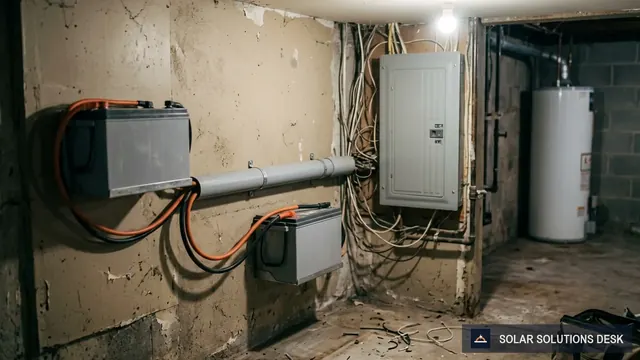
- Conditioned space. Remove the problem. A battery kept above freezing needs no heater energy and meets its charging range in any weather.
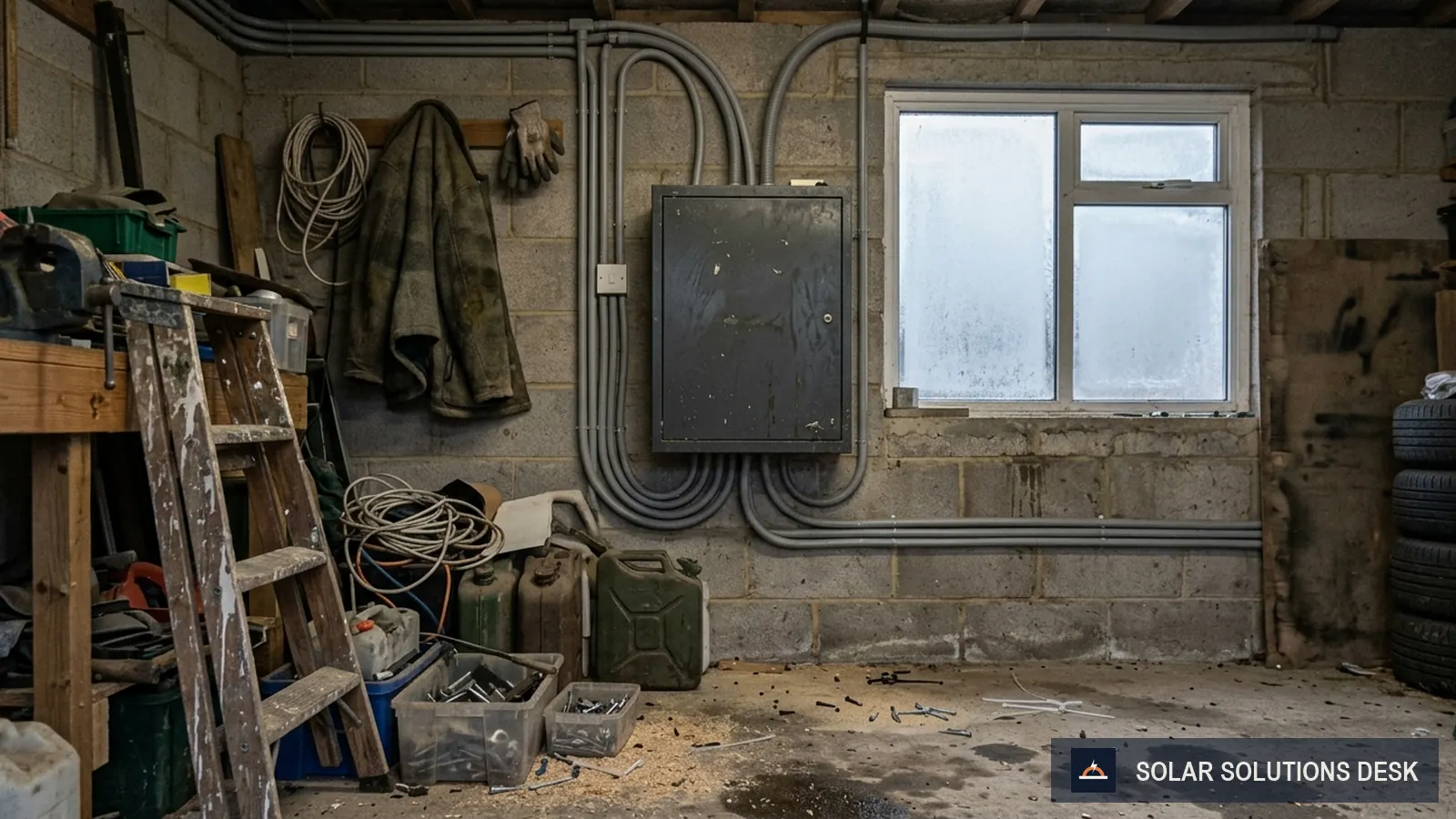
- Unheated garage or shed. Pick a model with a heater, and read the ingress rating. The 314Ah all-weather model is rated IP67 and the PowerPro IP65; the LifePower4 is IP20 and lists no heater, so treat it as an indoor, conditioned-space battery unless the maker says otherwise.
- Outdoors. Choose an outdoor-rated model, keep the installation within its listed discharge range, and plan the winter energy budget with heater load.
Part 2: panels in the cold produce more volts, not more safety margin
A solar panel’s open-circuit voltage (Voc) goes up as the cells get colder. Penn State’s course says the maximum possible array voltage is the open-circuit voltage at the lowest expected temperature for the site, and that designers use the module’s temperature coefficient for voltage or the correction table in NEC 690.7. A string that is safely under the inverter’s limit on a mild day can exceed it on a clear, very cold morning, when the panels are lit but not yet warm.
Penn State’s example uses a 38 V module and a lowest ambient temperature of −10°F, which it converts to a cell temperature of about −23°C: the module reaches 47.2 V and a ten-module string 472 V. Using that same module as a stand-in (our arithmetic on their numbers), here is what string length does against three EG4 limits:
| Modules in series | Voc at 25°C | Voc at −23°C | With the NEC 1.20 factor for −10°F |
|---|---|---|---|
| 10 | 380 V | 472 V | 456 V |
| 11 | 418 V | 519 V | 502 V |
| 12 | 456 V | 566 V | 547 V |
Compare with the limits: the 12000XP lists 500 V as its maximum PV input voltage; the 18kPV and FlexBOSS21 list 600 V, with a “high protection” point at 550 V where the inverter faults to protect the MPPT. The eleven-module string already exceeds the 12000XP’s 500 V in this example. A twelve-module string looks fine at 456 V on a mild day and then reaches about 566 V on the coldest morning in this example, beyond the 550 V trip point. All three sheets say damage above the maximum is not covered by warranty. The 18kPV and FlexBOSS21 also tell you to factor in “geographical considerations, weather patterns, and panel specifications” when sizing strings.
The voltage ceiling is only one of several checks. Penn State lists four: the lowest-temperature Voc must stay under the inverter’s maximum; the lowest-temperature MPP voltage must stay under the top of the MPPT window; the hot-day MPP voltage must stay above the bottom of the window; and the hot-day Voc must stay above the start-up voltage. Run all four with our string calculator and your panel’s datasheet, and have the installer confirm.
Part 3: snow on the array
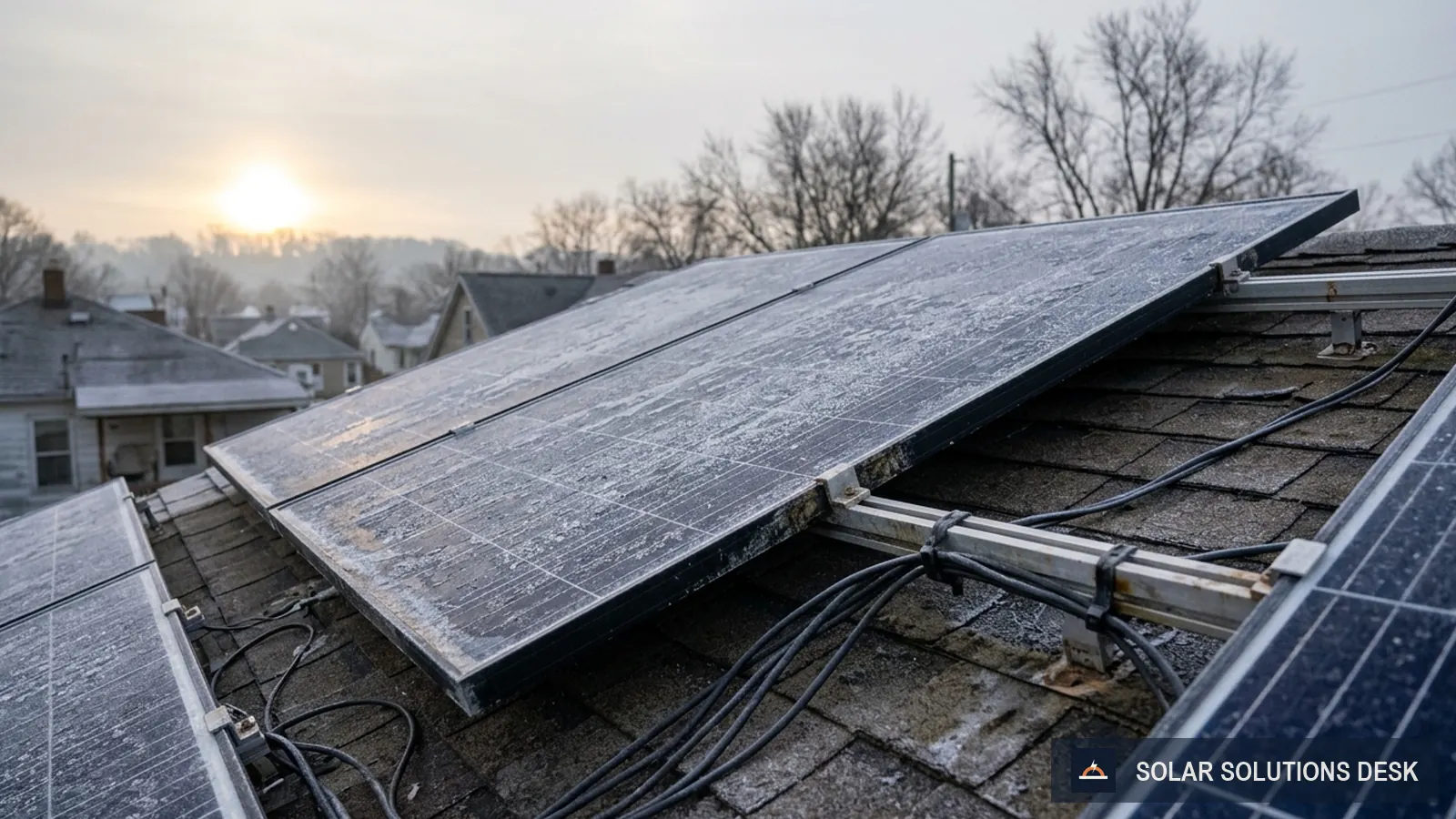
NREL integrated a snow-coverage model into its System Advisor Model and ran it for 239 US locations using 1961 to 1990 weather data. Its results for fixed-tilt arrays are an annual range: losses from 0% to about 16% in the continental US, concentrated from the Northeast across the Great Lakes to the Midwest and northern Rockies, and higher at some Alaska sites (almost 40% at one). Flagstaff, Arizona was modeled with 3% to 5% losses depending on tilt, while Phoenix had none.
The model assumes that after a snowfall the array is fully covered and stays covered until sunlight and temperature let the snow slide off. For the two designs tested, the tilt-equals-latitude arrays had lower snow losses than the 20-degree arrays in the continental US. Three cautions from the same report and the PVWatts manual:
- The authors say model results should be used for annual considerations, not for monthly or shorter periods. A single bad week can cost far more than the annual average suggests, and off-grid systems live and die by bad weeks.
- PVWatts’ default for snow loss is 0%. If your site gets real snow, its monthly numbers are optimistic until you change that input.
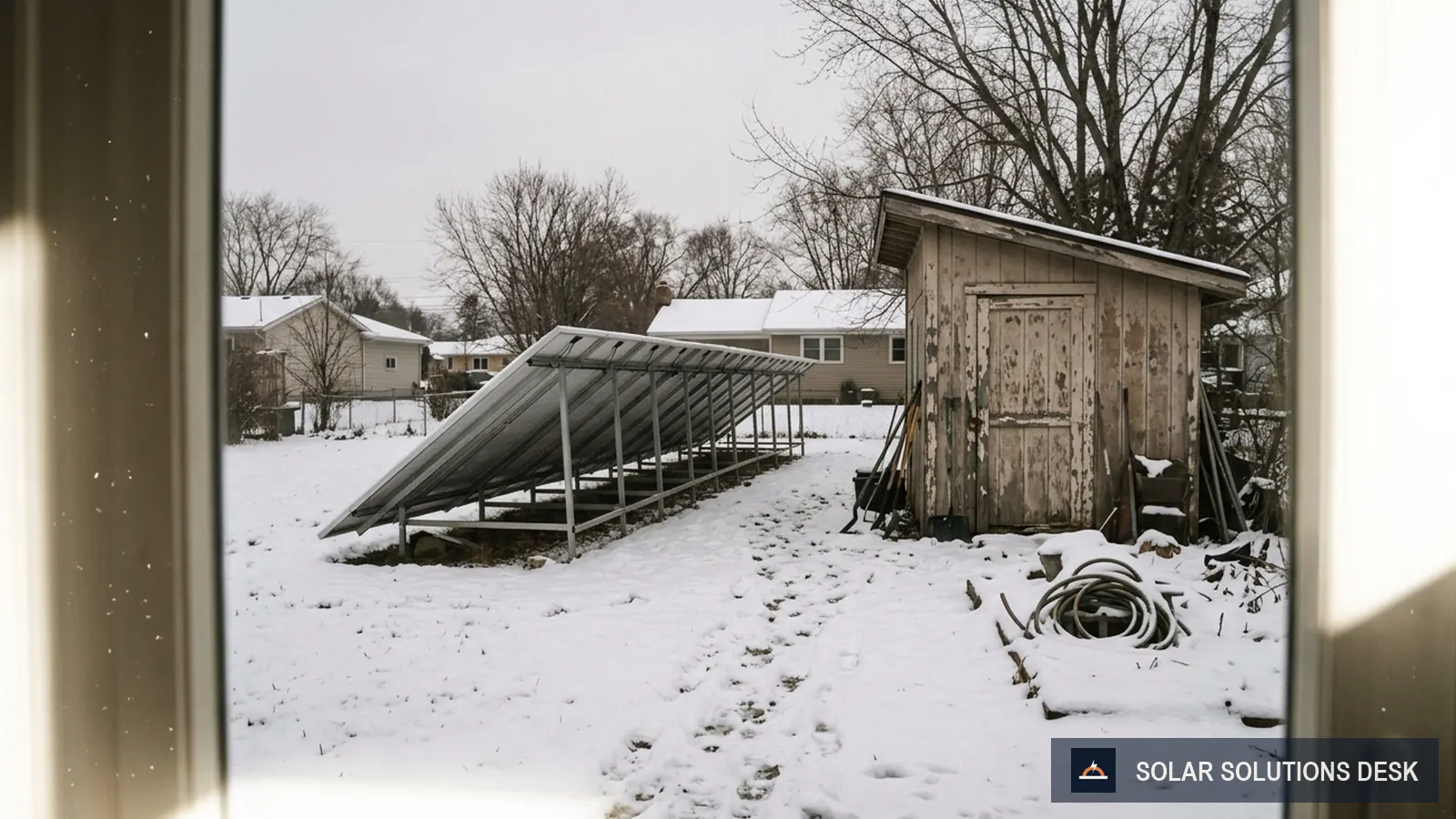
- The model is about losses of a fixed array. It does not tell you how to clear snow. Do not climb a snowy roof to clear panels.
Part 4: the winter sun that is left
Penn State’s stand-alone sizing lesson says a stand-alone system must supply its loads in any month, and that if the application needs more energy in winter, when insolation is low, the system should be sized to that season’s load. It also notes that the array orientation can be chosen to suit the critical design month. The method and an example are in size your solar for the worst month, and the arithmetic with batteries is in size a solar array for off-grid.
Use real numbers for your place: the solar-by-ZIP tool shows the month with the least output for your ZIP code. Then leave margin. The PVWatts manual says its errors may be as high as ±10% for annual totals and ±30% for monthly totals against typical weather, and that an actual year can deviate up to ±20% annually and ±40% monthly. A December that comes in 30% under the estimate is within what the tool itself warns about.
Part 5: inverter temperature ranges
Inverters have limits too, and they differ more than the headline power figures suggest:
| Inverter | Operating temperature range | Enclosure |
|---|---|---|
| 12000XP | 32 to 113°F (0 to 45°C) at full load | IP20 |
| 18kPV | −13 to 140°F (−25 to 60°C) | NEMA 4X outdoor rating |
| FlexBOSS21 | −13 to 140°F (−25 to 60°C), derating above 45°C | NEMA 4X |
The 12000XP’s lower limit is the freezing point, and the range is stated “at full load”; the sheet does not say what the inverter does outside it. A 12000XP in a garage that drops below 32°F is outside the printed range, so ask the maker or choose a conditioned location. The 18kPV and FlexBOSS21 list −13°F as the lower limit. The inverter’s range says nothing about the battery’s, so do not assume a battery in the same shed is comfortable at the inverter’s limit: the batteries above discharge to −4°F and charge only from 32°F.
The FlexBOSS21 also states its 16 kW output and idle draw “at 25 C”, so read the temperature in the condition column and not only the number. See how to read an inverter datasheet for more on conditions like that, and EG4 inverters compared for the full spec table.
Common mistakes
- Sizing strings at 25°C. Use the coldest recorded temperature for the site, not the average winter day.
- Counting charging hours the battery cannot use. If the battery is below freezing and unheated, the sunniest cold morning may add nothing.
- Forgetting the heater. It is a winter-only load of hundreds of watts per battery on the sheets.
- Using PVWatts’ default snow of 0%. Change it, or add margin.
- Treating an outdoor rating as a temperature rating. IP67 says how the enclosure keeps water out, not how cold the cells may be charged. The charging and discharging lines say that.
- Choosing the inverter for power only. Compare the operating range with where it will live.
Before you buy for a cold site
- Find the coldest recorded temperature near the site and calculate the cold Voc for your panel and string length.
- Decide where the battery lives. If it is not conditioned, buy one with a heater and budget its energy.
- Compare the inverter’s operating range with its location.
- Find your worst month in solar by ZIP and size for it, with margin for snow.
- Have a licensed electrician check the layout, the battery location and the strings against local code. Then pick the hardware in the system finder or the battery comparison.
If you are still deciding between a grid-tied and an off-grid design, start with off-grid, hybrid or grid-tied.
Questions people ask
Can lithium iron phosphate batteries be charged below freezing?
The EG4 battery sheets reviewed list charging only from 32°F (0°C) upward, even though discharging is listed down to −4°F (−20°C). The all-weather models add a heater that switches on at or below 32°F (0°C).
How much power does a battery heater use?
The EG4 314Ah all-weather battery sheet lists 448 W, and the 280Ah all-weather sheet lists 224 W. Neither sheet states how often the heater runs, so the energy per day depends on your climate and installation.
Does cold weather make solar panels more efficient?
Cold raises panel voltage, which is not extra power and can push a string past the inverter’s limit, so strings are sized for the coldest day. Winter also brings less sunlight and sometimes snow cover.
How much power do I lose to snow?
NREL modeled annual snow losses for fixed-tilt arrays between 0% and about 16% across the continental US, with a few Alaska sites far higher. That is a long-term annual average from a model, not a prediction for one winter.
Can an EG4 inverter run in freezing temperatures?
It depends on the model. The 12000XP lists an operating range of 32°F to 113°F at full load. The 18kPV and FlexBOSS21 list −13°F to 140°F, with the FlexBOSS21 derating above 45°C.
Should I size for the coldest month?
Size for the month with the lowest sun and the highest load, which is often a winter month. Add margin, because PVWatts’ monthly totals can be off by up to 30% even in a typical year.
Read next
Watts vs watt-hours: power and energy, explained
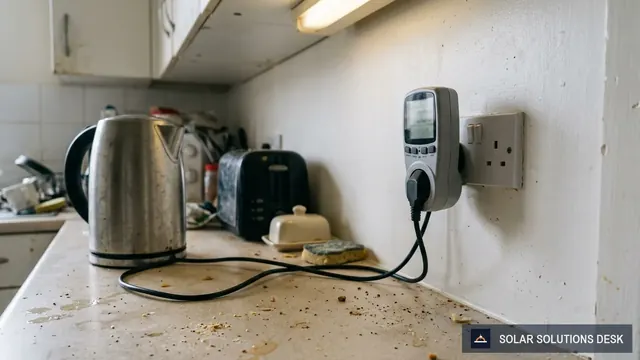
A watt measures power at a moment; a watt-hour measures energy over time. A 1,000 W heater running for one hour uses 1 kWh.
What is a LiFePO4 battery? LFP vs lead-acid explained
LiFePO4 (LFP) is a lithium-ion chemistry with an iron phosphate cathode. It trades energy density for long cycle life and thermal…
How to choose a solar inverter: five questions before you compare models
Decide grid or no grid, biggest start-up load, future solar, battery compatibility and location. Then compare models within one family.